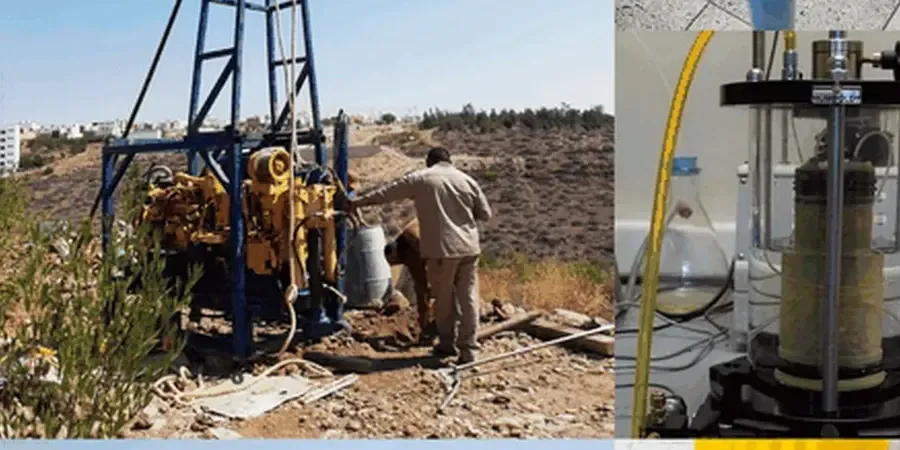
Ground improvement in Garden Grove represents a critical branch of geotechnical engineering focused on modifying and enhancing the mechanical properties of soil to support safe and durable construction. Given the city's dense urban fabric and ongoing redevelopment, builders frequently encounter subsurface conditions that are less than ideal for conventional foundations. This category encompasses a suite of advanced techniques—from dynamic compaction and vibrocompaction to preloading and geosynthetic reinforcement—each tailored to mitigate settlement, increase bearing capacity, and resist liquefaction. For property developers and public agencies alike, understanding these methods is not merely a technical requirement but a strategic investment in long-term structural integrity and risk reduction.
Garden Grove sits within the Los Angeles Basin, a region shaped by complex fluvial and alluvial depositional environments. Much of the city is underlain by Quaternary alluvium, which often includes loose sands, soft silts, and compressible clays. These soils can be prone to significant settlement under load and, in certain zones, may exhibit liquefaction potential during seismic events—a concern amplified by the proximity to active fault systems such as the Newport-Inglewood Fault. Additionally, the presence of shallow groundwater in parts of the city complicates excavation and compaction efforts. A thorough unsaturated soil analysis is often the first step in characterizing these variable moisture conditions and predicting how soils will behave under structural loads and changing environmental factors.
Regulatory compliance in Garden Grove is governed primarily by the California Building Code (CBC), which adopts the International Building Code with state-specific amendments, alongside local municipal ordinances. Chapter 18 of the CBC outlines rigorous requirements for soil investigations, foundation design, and ground improvement verification. For projects involving deep fills or compressible soils, the code mandates detailed geotechnical reports that demonstrate how proposed improvements will meet performance criteria for settlement and stability. The city's Public Works Department may also enforce additional grading and drainage standards, especially for hillside developments or sites near flood-prone areas. When designing a preloading design strategy, engineers must ensure that monitoring protocols align with both CBC mandates and the standards set forth by the American Society of Civil Engineers (ASCE) to validate that consolidation targets are achieved before structural loads are applied.
This category proves indispensable across a spectrum of project types in Garden Grove. Commercial and industrial developments, such as warehouse complexes and retail centers, frequently rely on dynamic compaction design to densify loose granular soils without the need for deep foundations. Residential subdivisions built on former agricultural land often benefit from vibrocompaction design to uniformly improve ground conditions beneath slab-on-grade homes. Infrastructure projects, including roadway widenings and stormwater detention basins, commonly incorporate geogrid specification to reinforce subgrades and extend pavement life. In environmental engineering contexts, geomembrane specification and landfill geotechnics are essential for constructing containment systems that protect groundwater and comply with stringent state and federal environmental regulations.
Ground improvement refers to engineering techniques that modify soil properties to increase strength, reduce compressibility, and mitigate liquefaction risk. In Garden Grove, it is essential due to prevalent loose alluvial sands and soft clays that can settle unevenly or fail during earthquakes, making untreated ground unsuitable for supporting buildings, roads, and underground utilities without excessive long-term deformation.
A geotechnical investigation, including borings and laboratory testing, determines if native soils meet project-specific bearing and settlement criteria. Indicators include high compressibility, low Standard Penetration Test (SPT) blow counts, shallow groundwater, or location within a mapped liquefaction hazard zone. If these conditions exist, a licensed engineer will recommend appropriate improvement methods to achieve code-compliant performance.
The California Building Code (CBC) sets mandatory standards for site characterization, design methodologies, and performance verification for all ground improvement work. It requires a geotechnical report demonstrating that improved ground meets safety factors against bearing failure and excessive settlement. The CBC also references industry standards from ASCE and ASTM for testing and inspection protocols during construction.
Yes, many methods are effective for both issues. Techniques like vibrocompaction and dynamic compaction densify loose granular soils, which reduces static settlement under load while simultaneously increasing resistance to earthquake-induced liquefaction. A comprehensive design evaluates the site's stratigraphy and groundwater conditions to select a solution that satisfies all performance objectives under both static and dynamic loading scenarios.